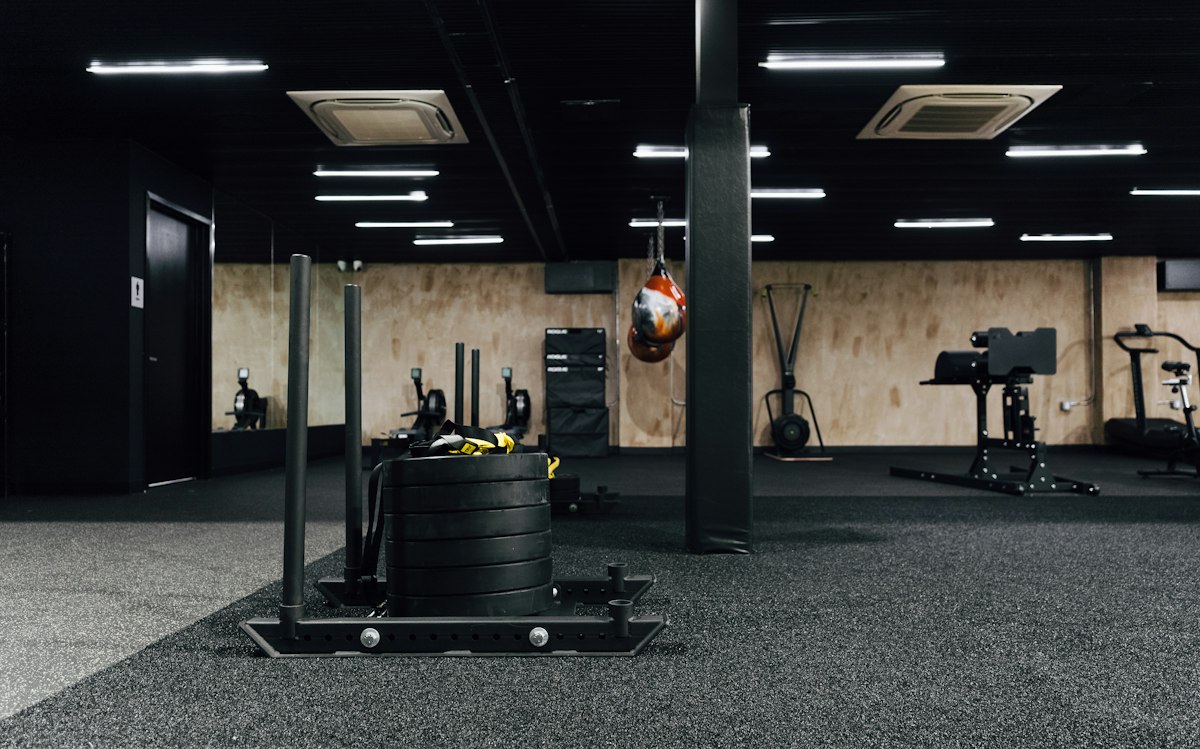
Rubber Mat Flooring Price: Complete Cost Factors, Material Options, and Budgeting Breakdown
Planning a flooring upgrade for a commercial training facility, a home garage gym, or an industrial workshop usually brings you straight to rubber. It remains the gold standard for high-impact protection, shock absorption, and long-term durability. Yet when you begin comparing price tags, the figures can feel all over the map, ranging anywhere from two dollars to upwards of fifteen dollars per square foot.
Why does one 4x6-foot slab cost forty dollars at a farm supply store while an identical-looking commercial tile runs three times that amount? The answer comes down to manufacturing processes, density, rubber grade, raw material sourcing, and specialized edge designs. Choosing the wrong specification can either drain your capital unnecessarily or leave your subfloor cracked beneath heavy deadlifts.
Related posts
Selecting the Optimal Vinyl Flooring for Healthcare Environments
When it comes to outfitting a hospital, every material choice carries significant weight, and flooring is certainly no...
Read more →
Understanding Engineered Wood Flooring Costs: A Comprehensive Breakdown
When you're dreaming of beautiful wood floors for your home, engineered wood often comes up as a compelling...
Read more →
Elevating Your Infrastructure: Choosing the Right Raised Floor System
In today's complex operational environments, from bustling data centers to precision-driven clean rooms and modern, adaptable offices, the...
Read more →
Navigating Raised Floor Costs: A Comprehensive Budgeting Overview
Budgeting for critical infrastructure projects often feels like navigating a maze, especially when it comes to specialized systems...
Read more →Understanding what drives these pricing differences allows you to balance performance with actual project requirements. Whether you are surfacing a modest basement workout corner or bidding on a five-thousand-square-foot fitness center, this breakdown outlines real-world material costs, installation fees, and the hidden expenses that vendors rarely feature on their product pages.
Key takeaways
- Expect material costs to range between $1.50 and $4.00 per square foot for basic utility mats, $2.00 to $6.00 for rolled rubber, and $3.50 to $16.00+ for precision interlocking tiles.
- Thickness dictates both shock absorption and price, with 3/8-inch serving as the standard balance for cost-to-performance in gym environments.
- Material composition matters: recycled black crumb rubber is the most affordable, while virgin rubber, vulcanized options, and high EPDM color-fleck percentages drive costs significantly higher.
- Freight shipping often adds several hundred dollars to total project budgets because rubber is dense, heavy, and typically shipped on freight pallets rather than standard parcel carriers.
Rubber mat flooring price overview by format
The layout and form factor of your rubber flooring have an immediate impact on upfront pricing and labor demands. Manufacturers produce rubber surfacing in three main configurations: straight-edge mats, interlocking puzzle tiles, and continuous rolls. Each format targets distinct functional environments and price brackets.
Heavy-duty stall mats
Originally designed for equine facilities, heavy-duty utility mats—commonly sold in 4x6-foot dimensions at 3/4-inch thickness—represent the lowest price entry point for heavy impact. These mats typically cost between $40 and $85 per mat, translating to roughly $1.70 to $3.55 per square foot. They are built from vulcanized crumb rubber and handle extreme point loads without flinching.
The trade-off lies in aesthetics, weight, and consistency. Stall mats can weigh nearly one hundred pounds each, making them difficult to transport and position. They often have stronger sulfur or petroleum odors, slight thickness variances along the edges, and textured wire or diamond surfaces that make them harder to clean than smooth athletic tiles.
Interlocking rubber tiles
Interlocking tiles eliminate the need for adhesives and provide clean, modular layouts for rooms with unusual dimensions. Consumer-grade interlocking tiles (1/4-inch to 5/16-inch thick) range from $2.50 to $5.50 per square foot. Professional, heavy-duty commercial interlocking tiles (3/8-inch to 1-inch thick) generally cost between $6.00 and $16.00 per square foot.
Waterjet-cut precision interlocking tiles command a premium because their seams fit tightly enough to resist dirt penetration. Premium options often feature dual-layer designs: a dense, shock-absorbing recycled base topped with an aesthetically refined virgin rubber layer designed to withstand constant foot traffic without scuffing.
Rolled rubber flooring
Rolled rubber provides the cleanest, most uniform appearance for medium to large square footages. Standard rolls measure 4 feet wide and run anywhere from 25 to 50 feet in length. Prices for rolled rubber average $1.80 to $4.50 per square foot for standard 8mm (5/16-inch) and 3/8-inch thicknesses with 10% to 20% color fleck.
While rolled goods offer a lower square-foot cost than interlocking tiles, they require more physical effort and installation skill. Unrolling, letting the material acclimate, trimming straight lines against baseboards, and applying double-sided seam tape or full-spread polyurethane adhesive add labor and tool expenses to your overall project.
How thickness impacts pricing
Thickness is the single most important technical metric when pricing rubber flooring. Thicker mats require more raw crumb rubber, longer press times, and cost more to transport. Evaluating your activity level prevents you from overpaying for unnecessary bulk or under-specifying and risking floor damage.
- 1/4-inch (approx. 6mm): $1.50 - $3.00 per sq. ft. Best suited for light cardio areas, spin studios, basement exercise zones, and under stationary equipment. It protects against light dumbbell drops and scuffs but does not absorb heavy impacts.
- 8mm to 3/8-inch (approx. 9.5mm): $2.20 - $5.50 per sq. ft. The industry standard for commercial training facilities, garage gyms, and functional fitness spaces. It accommodates moderate free weight drops, kettlebells, and high foot traffic with a balanced price profile.
- 1/2-inch (approx. 12.7mm): $3.50 - $7.50 per sq. ft. Recommended for dedicated free weight areas where dumbbells exceed 70 pounds regularly, providing enhanced acoustic dampening and subfloor concrete protection.
- 3/4-inch (approx. 19mm): $4.00 - $12.00+ per sq. ft. Found in heavy deadlift stations, Olympic lifting platforms, and equine barns. These heavy mats provide maximum acoustic isolation and subfloor protection under repetitive shock loads.
Material composition and color aesthetics
What goes into the rubber compound dictates price just as much as dimensions. Buyers are often surprised to see two mats of identical size separated by a 50% price gap. The distinction lies in raw materials, vulcanization methods, and color pigmentation.
Recycled SBR vs. virgin rubber
Standard black rubber flooring is almost entirely sourced from recycled Styrene-Butadiene Rubber (SBR), derived primarily from recycled truck tires. It offers excellent tensile strength, natural water resistance, and an affordable price point. However, non-vulcanized recycled crumb requires chemical binder resins (polyurethane) to hold the granules together, which can occasionally degrade over decades in moist environments.
Virgin synthetic rubber (such as EPDM) is made from raw polymers rather than scrap tires. It carries zero petroleum scent, offers superior UV resistance, and accepts vibrant colors smoothly. Virgin rubber surfaces can push square-foot costs upward of $10.00 to $20.00, reserving it mostly for high-end corporate gyms, luxury sports facilities, and medical fitness centers.
The cost of color flecks
Pure black rubber is always the most economical selection. When manufacturers introduce colored EPDM flecks to break up the monotonous black background and conceal dust, prices rise proportionally:
- 100% Solid Black: Base price benchmark.
- 10% to 17% Color Fleck: Adds approximately 10% to 20% to the base material cost.
- 20% to 40% Color Fleck: Adds 25% to 45% to the base cost.
- High-density Custom Patterns: Can double the standard raw material cost due to custom mixing and lower production run volumes.
Hidden expenses in rubber flooring projects
The advertised retail price on an online store rarely matches your final invoice. Overlooking ancillary expenses leads to budget overruns. When calculating your total expenditure, account for these standard extras.
Freight and pallet delivery charges
Rubber is exceptionally dense. A single 500-square-foot gym installation at 3/8-inch thickness easily weighs between 1,000 and 1,200 pounds. Parcel services will not handle these orders. Freight shipping with lift-gate service often costs between $150 and $500, depending on fuel surcharges, residential delivery access, and distance from distribution warehouses. For small orders, freight can occasionally exceed the actual cost of the rubber itself.
Subfloor preparation and moisture barriers
Rubber mats trap moisture beneath them if laid directly over unsealed concrete slabs prone to hydrostatic pressure or vapor emission. If moisture rises, it can cause mold development, odor problems, and adhesive breakdown. Budgeting for an epoxy vapor barrier or heavy polyethylene underlayment costs roughly $0.40 to $1.20 per square foot. Patching concrete divots and leveling uneven screed before laying rubber adds another $0.50 to $1.50 per square foot in leveling compound and prep work.
Adhesives and installation hardware
If you choose rolled rubber, securing the seams is mandatory to prevent shifting and edge curling. High-tack double-sided rubber seam tape costs roughly $40 to $60 per roll (covering roughly 75 to 100 linear feet). If you choose a full-trowel glue-down installation using polyurethane adhesive, expect to spend $90 to $140 per 2.5-gallon pail, which covers 200 to 300 square feet depending on trowel notch size.
Professional labor rates
While many property owners choose to lay interlocking tiles or heavy mats themselves, large rolled installations often require commercial flooring installers. Professional installation labor generally runs between $1.50 and $3.50 per square foot, depending on regional labor rates, the complexity of perimeter wall cuts, and whether full glue-down application is specified.
Value comparison: making the right purchasing decision
To extract the highest value from your flooring investment, map your purchase directly to room usage rather than buying the highest-priced product across the board. Hybrid layouts provide substantial savings without compromising structural protection.
Consider zoning your space. Use high-end, 10% to 20% fleck rolled rubber across 70% of the room to achieve an open, visually appealing design for cardio, stretching, and general workouts. Then, designate a dedicated heavy lifting zone using 3/4-inch budget-friendly stall mats or dense interlocking rubber deadlift drop tiles. This strategy keeps material expenses controlled while ensuring your concrete subfloor remains fully shielded where heavy weights actually hit the ground.
Frequently asked questions
What is the most affordable rubber flooring option for a home gym?
Heavy-duty 4x6-foot horse stall mats (3/4-inch thick) from agricultural supply retailers remain the most cost-effective choice for home setups, averaging around $1.70 to $2.50 per square foot. While they lack the refined finish and scent-neutral properties of specialized fitness tiles, their impact resistance per dollar is unmatched.
How much does professional installation add to rubber mat flooring prices?
Hiring an installer typically adds $1.50 to $3.50 per square foot to your budget. Basic loose-lay interlocking tiles fall on the lower end of this range, while full-spread glue-down rolled rubber requiring intricate corner cuts and edge trim lands on the higher end.
Does adding color flecks improve the durability of rubber flooring?
No, color flecks are strictly aesthetic and do not improve structural durability or tensile strength. The flecks are composed of colored EPDM rubber, which performs similarly to the surrounding black recycled SBR rubber but conceals surface dust, chalk, and everyday footprints better than plain black surfaces.
How long will rubber mat flooring last before needing replacement?
Quality rubber flooring lasts between 10 and 20 years in high-traffic commercial facilities, and often lasts a lifetime in residential or garage settings. Paying extra for high-density, vulcanized rubber or factory-warranted commercial rolls ensures resistance against chipping, flaking, and indentation over years of heavy use.
Can I install rubber mat flooring directly over concrete?
Yes, rubber can be installed directly over clean, flat, and dry concrete. However, if your concrete floor suffers from moisture transmission or sits below grade, you should test moisture vapor levels and consider applying a moisture barrier first to prevent mildew and trapped condensation beneath the mats.
Conclusion
Navigating rubber mat flooring prices requires balancing raw material quality, thickness, format, and logistical expenses against your actual functional demands. By evaluating whether your layout calls for budget-friendly stall mats, seamless rolls, or precision interlocking tiles, you can avoid unnecessary markups while protecting your subfloor. Factor in shipping freight, subfloor moisture prep, and installation materials early to build an accurate, realistic budget for your project.