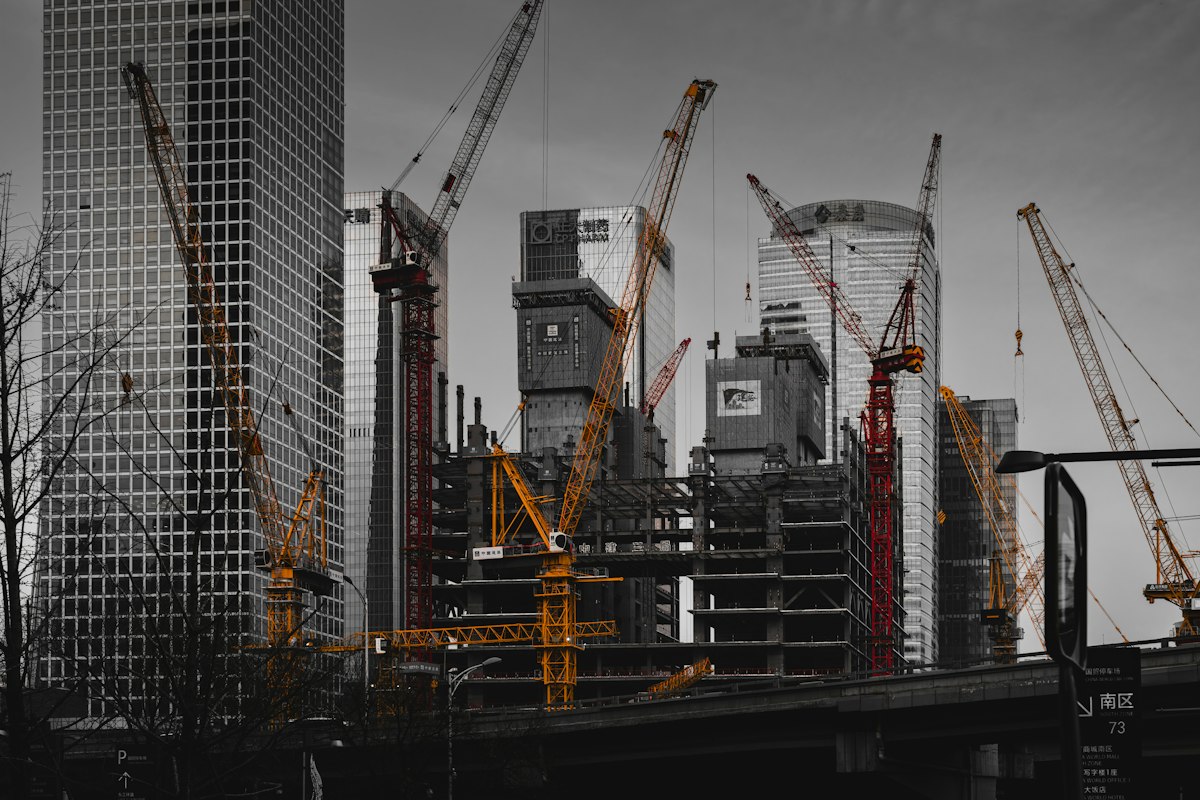
Powering Progress: A Deep Dive into Industrial Construction Companies
When your organization plans a new manufacturing plant, a critical energy facility, or a complex processing unit, the stakes are undeniably high. These aren't just buildings; they're intricate operational ecosystems designed for precision, scale, and often, extreme conditions. The success of such ventures hinges almost entirely on the expertise of the team you bring on board.
Choosing the right partner from the specialized world of industrial construction companies is a monumental decision. It's about far more than just bricks and mortar; it involves navigating stringent regulatory frameworks, integrating advanced technologies, and managing projects where safety, efficiency, and long-term performance are paramount.
Related posts

Crafting Your Perfect New Bathroom: Ideas and Practical Steps
Embarking on a new bathroom design project is more than just picking out pretty tiles; it's about envisioning...
Read more →Finding the Right Local Home Contractor for Your Project
Embarking on a home improvement project, whether it's a minor refresh or a major renovation, is an exciting...
Read more →
Finding Reliable Small Construction Companies Near You for Home Renovations and Repairs
Finding the right contractor for a home project often feels like a full-time job. You start by searching...
Read more →Unpacking the Value of Pre-Engineered Steel Buildings for Modern Construction
When you’re planning a new construction project, whether it’s for a growing business, an expanding farm, or a...
Read more →This deep dive will equip you with the insights needed to understand what truly sets industrial construction apart. We'll explore the unique demands of these projects, the specific capabilities you should seek in a potential contractor, and the critical factors that drive successful project delivery from concept to commissioning.
Are you ready to make an informed choice that will shape your company's operational future? Let's cut through the complexity and focus on what matters most.
Key Takeaways
- Industrial construction demands specialized expertise due to unique operational, safety, and regulatory requirements.
- Selecting a firm requires rigorous evaluation of their safety record, technical capabilities, project management, and financial stability.
- Understanding various contract models and project lifecycles is essential for effective partnership and risk mitigation.
- The future emphasizes sustainability, modularization, and data-driven insights in industrial project execution.
What Exactly Defines Industrial Construction?
Industrial construction engineers environments for large-scale production, processing, or storage – distinct from commercial or residential builds. These aren't just structures; they're intricate operational ecosystems. Think power plants, chemical refineries, automotive factories, and data centers, all requiring infrastructure for specialized equipment and complex workflows. Focus remains on functionality, durability, and seamless process integration.
The Specialized Scope of Industrial Projects
Industrial construction encompasses diverse sectors, each with unique challenges requiring specific domain knowledge. Examples include: Manufacturing (precision engineering for production lines); Chemical & Petrochemical (high-pressure, hazardous material facilities); Mining & Metals (infrastructure for extraction in tough environments); Logistics & Warehousing (large-scale, automated material handling); and Pharmaceutical & Biotechnology (cleanroom facilities with stringent controls). Minor oversights can have catastrophic consequences.
Why Specialization Matters: Mitigating Risks and Maximizing Rewards
Industrial projects carry heightened risks: safety, environmental impact, downtime, and budget overruns. Engaging a specialized firm is thus a necessity. They possess unparalleled understanding of industry-specific regulations, safety standards, and best practices, managing hazardous materials and complex logistics expertly. Their experience minimizes accidents and ensures smoother execution. Specialized contractors also excel at Value Engineering, optimizing design for long-term operational cost reduction and enhanced ROI. The reward is a high-performing, compliant, and sustainable asset.
Choosing the Right Partner: Key Criteria for Industrial Construction Companies
Selecting an industrial construction company demands meticulous vetting. This strategic partnership defines your project's success. What critical capabilities should you seek?
Proven Experience and Portfolio
Does the company have a demonstrable history of completing similar projects in scope, scale, and industry? Review their portfolio, client testimonials, and case studies. Familiarity with your sector's challenges allows them to anticipate and mitigate issues effectively.
Unwavering Commitment to Safety
Safety records are non-negotiable. Request their Experience Modification Rate (EMR) and Total Recordable Incident Rate (TRIR); low numbers indicate a strong safety culture. Discuss protocols, training, and emergency response. This protects lives and assets.
Technical Capabilities and Engineering Prowess
Industrial projects demand advanced engineering. Does the company employ strong civil, mechanical, electrical, and process engineers? Do they leverage modern tools like Building Information Modeling (BIM)? Technical depth directly impacts quality and efficiency.
Robust Project Management and Communication
Effective project management is crucial. Inquire about methodologies, software, and communication protocols. How do they track progress, manage changes, and keep stakeholders informed? Transparency and proactive communication are essential.
Financial Stability and Bonding Capacity
Industrial projects involve substantial capital. Ensure the contractor's financial health to complete your project. Verify their bonding capacity, which offers protection. Request financial references and credit ratings.
Regulatory Compliance and Environmental Stewardship
Operating within strict regulatory frameworks is standard. Confirm adherence to all relevant local, national, and international regulations, including environmental permits. Environmental stewardship reflects a responsible organization.
Understanding the Project Lifecycle: From Concept to Commissioning
Industrial construction projects follow a structured lifecycle, far beyond simply breaking ground. Understanding each phase helps you engage effectively with your contractor.
- Feasibility: Project viability, scope, preliminary design.
- Detailed Engineering: Precise specifications, drawings, calculations.
- Procurement: Sourcing materials, equipment, services.
- Construction: Physical execution, structural, mechanical, electrical.
- Commissioning: Testing systems for integrated operation.
- Handover: Formal transfer, documentation, training.
A proficient company demonstrates expertise across every stage, ensuring seamless transitions.
Navigating Costs and Contracts: Essential Considerations
The financial framework of industrial construction is complex. Understanding contract models and cost implications is paramount for managing expectations and mitigating risks.
Common Contract Models
- EPC (Engineering, Procurement, Construction): Contractor design, procurement, construction; fixed price, high risk transfer.
- EPCM (Engineering, Procurement, Construction Management): Contractor manages on client's behalf; client holds contracts, more control.
- Design-Build: Single entity for design and construction.
- Lump Sum (Fixed Price): Fixed total price for defined scope.
- Cost-Plus: Client pays costs plus contractor's fee, flexible.
Each model has pros and cons. Thorough contract negotiation is essential.
Managing Change Orders and Contingencies
No industrial project is immune to changes. Transparent, efficient change order management is critical. Always budget for contingencies (10-20% of cost) to cover unexpected issues.
The Future of Industrial Construction: Innovation and Sustainability
The industrial construction sector continually evolves, driven by technology and sustainability. Forward-thinking companies embrace these trends for efficiency and innovation.
- Digital Transformation: BIM, AI analytics, drones enhance design, scheduling, safety.
- Modularization and Prefabrication: Off-site fabrication improves quality, shortens schedules.
- Sustainable Practices: Green materials, energy-efficient designs, waste reduction.
- Advanced Robotics and Automation: Automation for safety and productivity.
Partnering with firms investing in these approaches offers a competitive edge, delivering robust, future-ready, and responsible facilities.
Frequently Asked Questions About Industrial Construction Companies
What's the fundamental difference between industrial and commercial construction?
Industrial construction engineers specialized facilities for manufacturing, processing, or energy, prioritizing operational efficiency, heavy infrastructure, and safety for hazardous processes. Commercial construction builds for business and public use (offices, retail), focusing on aesthetics and human comfort. Industrial projects involve far more complex structural demands, regulatory compliance, and equipment integration.
How do industrial construction companies ensure safety on complex sites?
Industrial companies implement rigorous safety management systems: hazard assessments, site-specific plans, continuous training, and daily briefings. They adhere to strict regulatory standards (e.g., OSHA), employ dedicated safety officers, and use advanced protocols for hazardous materials or confined spaces. A strong, accountable safety culture is cultivated from the top down to protect lives and assets.
What are the common contract types for industrial projects, and which is best?
Common types include EPC, EPCM, Design-Build, Lump Sum, and Cost-Plus. The 'best' depends on project characteristics, risk tolerance, and desired control. EPC/Lump Sum offer cost certainty, transferring risk. EPCM/Cost-Plus provide client control but more cost exposure. Always consult legal and financial advisors to align contracts with project goals.
How long does a typical industrial construction project take from start to finish?
Industrial project durations vary immensely by scale, complexity, and industry. Smaller expansions might take 12-18 months; large plants, 3-5 years or more. Key factors: regulatory approvals, detailed engineering, equipment lead times, site conditions, and methodology. Experienced contractors use realistic scheduling, often with critical path method (CPM) software, for accurate timelines.
What should I look for in a company's project portfolio to assess their fit?
When assessing a portfolio, prioritize projects similar in type, scale, and complexity to yours. Look for experience in your specific industry. Evaluate the company’s role, safety record, and ability to meet deadlines/budgets. Seek client references who can speak to their performance, problem-solving, and overall partnership quality.
Conclusion
Undertaking an industrial construction project is a significant endeavor with substantial investment and long-term implications. Partnering with the right industrial construction company is about securing a strategic ally capable of transforming complex visions into tangible, high-performing assets. By meticulously evaluating their experience, safety culture, technical expertise, and project management, you position your organization for sustained operational excellence and future growth.